


The final texture and stylistic expression of jewelry depend largely on the surface finishing technique. Mirror polish, brushed, and sandblasted finishes are the three mainstream surface treatment methods in the jewelry industry. They differ significantly in visual effect, wearing experience, maintenance difficulty, and cost, and are respectively suited for different base materials-such as stainless steel, brass, and alloys-as well as distinct style positioning. For jewelry buyers and brands, understanding the characteristics of these three processes and their appropriate applications is the cornerstone for precise product selection and targeting the right audience.

Visual Effects of the Three Processes: Corresponding to Distinct Style Positioning
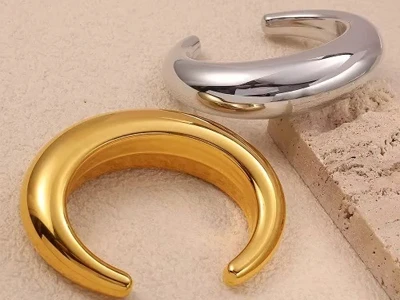
These three techniques present distinctly different visual styles. Mirror polishing creates a highly reflective, glossy finish with intense luster and a refined appearance, maximizing the metal's "affordable luxury" appeal; it is the mainstream technique for gold-plated jewelry and basic stainless steel pieces. Brushed finishing produces a delicate, parallel matte texture with a subtle, understated tactile quality, making it suitable for minimalist, everyday, and casual business styles; Sandblasting produces a frosted, matte finish with a soft texture and subdued luster, exuding a sophisticated matte ambiance; it is a common technique for trendy, edgy, and vintage-style jewelry.
Comparative Analysis of Wearability and Maintenance Requirements
There are significant differences in the daily wear experience and maintenance costs among these three techniques. Mirror-polished jewelry has a high level of smoothness, but its surface is prone to fingerprints and fine scratches, requiring more careful handling and maintenance; Brushed jewelry's texture naturally conceals minor wear marks and resists daily friction, requiring no special care during everyday wear and making it ideal for frequent commuting; sandblasted jewelry has a distinct grainy texture that hides minor bumps and scratches, offering the best durability and the lowest maintenance costs. From a long-term wear perspective, brushed and sandblasted finishes are better suited for frequently worn stainless steel items such as earrings and bracelets.

Process Suitability and Cost Differences Across Base Materials
The optimal processes vary depending on the metal base material. Stainless steel is hard and stable, perfectly showcasing all three finishes: mirror-polished stainless steel jewelry maintains a lasting luster, while brushed stainless steel jewelry offers outstanding value for money, making it the base material with the broadest compatibility across all finishes; brass is better suited for brushed and sandblasted finishes, as it easily achieves a vintage, aged look, making it the mainstream choice for vintage-style jewelry; Alloys are often paired with the mirror-polished finish, which quickly enhances the product's refinement while effectively controlling production costs. In terms of cost, the mirror-polished process involves the fewest steps, while sandblasting and brushed finishes require slightly more steps, resulting in a slight increase in overall costs.
Scenario-Based Commercial Product Selection Strategies
Different channels and target audiences require distinct approaches to finish selection. The "affordable luxury" retail and gift sectors prioritize the mirror-polished finish to elevate the perceived value of products through its lustrous texture; everyday accessories and commuter styles emphasize brushed finishes, which are understated and durable, meeting the demands of frequent wear; while trendy retro and unisex styles opt for sandblasted finishes to create product differentiation through unique textures. Retailers can tailor their strategies based on their positioning, matching appropriate finishes across the full product range-including rings, earrings, necklaces, and jewelry sets-to build a richly layered product portfolio.

Overall, these three surface finishing techniques each have their own focus and serve as the core pathways for jewelry products to achieve stylistic differentiation. As a local professional custom jewelry manufacturer, Kiss Diamond possesses full production capabilities for mirror-polished, brushed, and sandblasted finishes. We can accommodate surface finishing needs for jewelry made from all materials-including stainless steel, brass, and alloys-and support custom finishing and mass production across the full range of categories, including rings, earrings, necklaces, and bracelets. The factory is equipped with a standardized quality control system to ensure consistent and uniform finishing results. Leveraging flexible production lines and rapid prototyping capabilities, we help our partners precisely meet product selection needs for various scenarios.


