


In 2026, the global jewelry industry stands at a critical structural turning point.
In early 2026, the price of gold made a historic breakthrough, surpassing the $5,100-per-ounce mark-a rise of more than 220% compared to early 2020. The sustained high prices of precious metals such as gold, platinum, and silver are profoundly altering the operating dynamics of the entire industry. At the same time, the United States' implementation of differentiated import tariff policies targeting major jewelry exporting countries-including the European Union, the United Kingdom, Brazil, and China-has further exacerbated uncertainty in global supply chains. According to a survey of 1,507 jewelry industry buyers and exhibitors conducted by the Hong Kong Trade Development Council in early 2026, 35% of respondents expected sales to grow over the next 6 to 12 months, while 58% believed they would remain stable; looking ahead to the next 1 to 2 years, 44% of respondents anticipated sales growth, and 49% expected sales to remain at current levels.
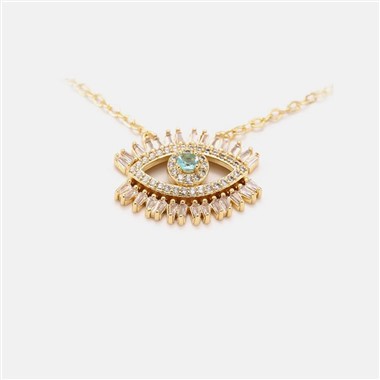

Faced with the dual challenges of rising raw material costs and diverging consumer demand, the industry is shifting from extensive expansion to a new cycle of high-quality development characterized by meticulous cultivation. Bi Lijun, Vice President of the China Jewelry and Gemstone Association, pointed out that 2025 marks a significant turning point for the industry, as the development paradigm is shifting from pursuing scale expansion and prioritizing quantitative growth to a model that prioritizes quality and efficiency while ensuring intensive and efficient use of resources. On the product side, the industry's selling point for gold consumption is rapidly shifting from weight to craftsmanship. "Hard gold" techniques use electroplating and demolding technologies to expand the volume of gold, enabling a fingertip-sized gold bead-weighing just 1.4 grams after processing-to achieve the same appearance as 24-karat gold. Orders for 3D and 5G hard gold products have risen from 10% to 40% of the total. Techniques such as setting, chasing, and enameling combine gemstones and diamonds with gold to enhance product value and cost-effectiveness while keeping the total price in check.
On the consumer side, the industry is showing a clear trend of polarization. High-end consumers are focusing on investment-grade products such as colored gemstones and jadeite, while mass-market consumers are leaning toward more affordable organic gemstones like pearls and amber. According to a survey by the Hong Kong Trade Development Council, fashion jewelry and fine jewelry are viewed as the two segments with the greatest growth potential, and gold remains the metal with the strongest demand. In terms of gemstones, while diamonds still lead with a 29% share, rubies and pearls are rapidly closing the gap, reflecting the diversification of consumer preferences. Looking ahead to 2026, the Chinese jewelry market-leveraging the growing potential of key consumption hubs such as the Yangtze River Delta, the Guangdong-Hong Kong-Macao Greater Bay Area, and the Beijing-Tianjin-Hebei region-is viewed by the industry as the most significant opportunity in the global jewelry sector.


