


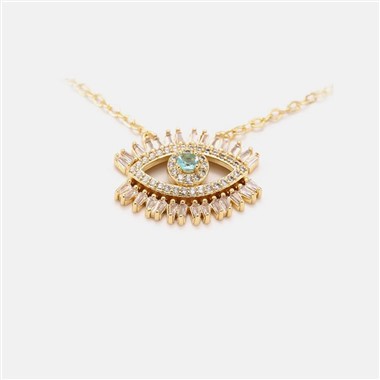
The jewelry market in 2026 is undergoing an unprecedented realignment of values. Whereas in the past consumers primarily bought jewelry based on "whether it looked good," they now ask more often, "How long will this last?" and "What does this represent?" McKinsey's *2026 Fashion Industry Report* points out that the jewelry category continues to outperform the broader fashion sector, driven by consumers' perception of jewelry as a vehicle for long-term investment, self-expression, and self-gifting. Earlier this year, Bulgari's CEO also stated bluntly, "Customers feel reassured by purchasing products whose value appreciates over time." However, this does not mean everyone is seeking "heirlooms." In fact, current jewelry consumption is proceeding along two completely distinct tracks: on one end is lightweight jewelry for everyday wear, where lab-grown diamonds, silver jewelry, and lightweight gold pieces are meeting consumers' styling needs for various occasions with more affordable prices and higher purchase frequency; on the other end is investment- and heritage-oriented high-end jewelry, where natural diamonds, high-karat gold, platinum, and rare gemstones are imbued with enduring narratives; while purchase frequency is low, decision-making is extremely prudent.
This dual-track landscape is also clearly reflected in retail data. According to the "2026 China Jewelry Brand Luxury Index Report" released by the VIP Research Institute, by 2025, the Chinese jewelry market will reach 750 billion yuan, but profit distribution will take the form of an extreme inverted pyramid. The top 15 luxury brands will capture 60% of the industry's profits, with an average net profit margin nearing 30%, while the 29 mass-market brands will account for only 1% of profits, with an average net profit margin as low as 1.2%. The report concludes that over the next five to ten years, 80% of major domestic jewelry brands may be eliminated by the market, and "no high-end, no profit" has become a widespread reality in the industry. At the same time, consumer purchasing behavior has become more purpose-driven. Research by Jewelers Mutual Group shows that buyers are linking purchases to personal milestones, everyday moments, and self-expression, rather than traditional festive occasions or weddings. Jewelry is no longer a passive consumer good given by others, but rather a vehicle for a lifestyle choice made actively. When someone stands at a counter selecting a necklace, they may not be choosing a piece of jewelry, but rather a token to accompany them in their daily life-and this may well be the fundamental logic behind the transformation of the jewelry market in 2026.


