


As Gen Z and Millennials increasingly become the main consumer demographic, transparency, traceability, and ethical standards related to sustainability are gradually surpassing price and design alone to become their top priorities when purchasing jewelry.
Industry research data shows that in recent years, there has been a significant increase in the proportion of consumers concerned with the ethical sourcing of diamonds, fair-trade labor standards, and traceability of origin. The vast majority of respondents even explicitly stated they are willing to pay a higher premium for these verifiable ethical elements. For this new generation of consumers, what they are purchasing is no longer just a sparkling stone, but a sense of identity deeply tied to their personal values. For many young buyers, a lab-grown diamond or a ring crafted from gold sourced from a single mine no longer represents a compromise; rather, because it carries no environmental or social burden, it has become a more conscious symbol of high-end luxury.

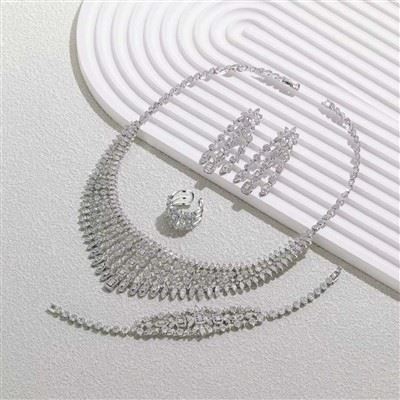
Beyond material inheritance, the emotional value of jewelry is playing an increasingly critical role in purchasing decisions. Today's jewelry wearers are no longer merely recipients of gifts from others; they closely associate jewelry purchases with self-reward, professional milestones, or commemorations of life's moments. Design language has consequently become more gender-neutral and personalized. Clean, crisp geometric lines, shared shopping experiences that blend the aesthetics of both partners, and details that incorporate personal memories through custom engravings are all enriching the jewelry-buying experience. It can be said that, amid today's fast-paced and ever-changing lifestyle, jewelry has become a remarkably resilient vessel for emotions.
Beyond expressing goodwill and individuality, jewelry's value retention and safe-haven attributes are being re-evaluated in an uncertain macro-environment. Compared to purely financial assets such as gold bars and coins, finished jewelry certainly lacks the same liquidity when it comes to liquidation. However, for high-end jewelry that combines aesthetic value with the attributes of a tangible asset, it still demonstrates a certain degree of resilience amid market volatility. The booming second-hand luxury market provides compelling evidence of this-the transaction volume of the second-hand jewelry market has already reached a substantial scale by 2025, with significant growth potential yet to be realized. This indicates that when a piece of jewelry simultaneously fulfills the wearer's aesthetic needs, emotional resonance, and ethical convictions, it possesses an irreplaceable, solid value in any market cycle.

From the pursuit of "preserving value" to the pursuit of "preserving value while being worthy of me," the jewelry industry is undergoing a subtle yet profound transformation.


